Museum Pass Planners

Home / Family Passes

Family & Group Museum Passes for Egypt — Children's Rates, Free Ages & Site Suitability

Egypt's museums and monuments offer significant discounts for children and groups — but the rules vary site by site and are rarely explained clearly at the gate. Here is the complete picture for 2026.

Children's pricing — the basics

Free entry ages and children's rates across Egypt's main sites

Ministry of Tourism and Antiquities sites operate a consistent children's pricing structure for foreign visitors, but several major sites — including the GEM and Abu Simbel — apply slightly different thresholds. Knowing the exact age bracket before you arrive avoids surprises at the cashier, particularly at sites where cash is the only option.

Site Free entry (age) Children's rate (age) Children's price (EGP) Adult rate (EGP) Notes
Grand Egyptian Museum (GEM) Under 6 Ages 6–12 450 900 Kids area on ground floor; interactive exhibits
Egyptian Museum, Tahrir Under 6 Ages 6–16 225 450 Royal Mummies Hall charged at full children's rate separately
Giza plateau (exterior) Under 6 Ages 6–16 180 360 Inner chambers (Khufu): child rate EGP 300; Solar Boat: EGP 50 child
Karnak Temple Complex Under 6 Ages 6–16 225 450 Large open-air complex; suitable for all ages
Valley of the Kings Under 6 Ages 6–16 240 480 Underground tombs; not recommended under 7; premium tombs adult-only (Nefertari)
Luxor Museum Under 6 Ages 6–16 140 280 Calm, air-conditioned; good for tired or younger visitors
Nubian Museum, Aswan Under 6 Ages 6–16 100 200 Excellent display layout for families
Philae Temple Under 6 Ages 6–16 180 360 Boat ride to island popular with children; smooth stone surfaces easy to navigate
Abu Simbel Under 4 Ages 4–16 300 600 Lower free threshold; both temples on same ticket
Cairo Citadel complex Under 6 Ages 6–16 180 360 Wide open courtyards; good city views accessible to all ages
Family-friendly sites

The best Egypt museums and monuments for children

Not every world-class site is a good family visit. The GEM, Karnak and the Nubian Museum consistently deliver well for children; the Valley of the Kings is often a disappointment for those under 8. Here is what each major family-relevant site actually offers in practice.

The glass facade of the Grand Egyptian Museum near Giza
Best for under-12s · Giza

Grand Egyptian Museum — the strongest family choice

The GEM has been designed with families in mind in a way that older Egyptian museums were not. The ground floor features wide accessible corridors, stroller-friendly surfaces, clear multilingual signage and a dedicated GEM Kids area with hands-on archaeology activities for children aged roughly 4–10. The Tutankhamun collection — the centrepiece of the upper floors — uses large-format cases and excellent lighting that makes the gold objects genuinely compelling for children old enough to understand scale. Allow 2 hours for a family visit. Timed-entry booking is required; book 3–7 days ahead during high season. Children under 6 enter free; ages 6–12 pay EGP 450.

Combine with other Giza sites →
The Egyptian Museum facade on Tahrir Square in Cairo
Iconic · Cairo

Egyptian Museum, Tahrir — overwhelming but rewarding

The Egyptian Museum on Tahrir Square is genuinely chaotic and does not cater to families with young children in the way the GEM does — it has no dedicated children's areas, limited accessible routing and dense, text-heavy displays in English and Arabic. That said, the sheer volume and visual drama of the collection — mummies, golden masks, royal statues at child-eye-level — makes it memorable for children aged 9 and above who have some context for ancient Egypt. The Royal Mummies Hall (EGP 225 children) is dimly lit and may be too intense for younger visitors. Child rate (ages 6–16) is EGP 225; under-6 free.

Cairo Pass coverage →
Columns of Karnak Temple in Luxor at golden hour
Scale & impact · Luxor

Karnak Temple Complex — best outdoor family site in Luxor

Karnak is the right size and the right kind of site for a family visit in Luxor. The scale of the hypostyle hall — 134 columns, some over 20 metres high — is genuinely jaw-dropping for children and adults alike. The sacred lake, the avenue of ram-headed sphinxes and the obelisks of Hatshepsut provide a variety of set-pieces that keep children moving through the complex rather than standing in front of display cases. The outdoor setting means heat is a factor: plan an early arrival (opening at 6:00am in high season) and leave by 11:00am. Child rate (ages 6–16) is EGP 225; under-6 free.

Plan a Luxor route →
Philae Temple on its island near Aswan
Hidden gem · Aswan

Nubian Museum — Aswan's underrated family site

The Nubian Museum in Aswan is consistently underrated in the context of family travel. Its collection covers Nubian culture, history and the story of the Aswan High Dam and the rescue of Abu Simbel in a well-designed building with good natural light and an outdoor sculpture garden. Children respond well to the boat and tool models, the diorama of a Nubian village and the outdoor garden where large sculptural pieces can be explored rather than just looked at from behind barriers. The museum is smaller than Cairo's equivalents, takes 1.5 hours and rarely has the crowd pressure of the Valley of the Kings or Karnak. Child rate (ages 6–16) EGP 100; under-6 free.

Aswan budget guide →
The Great Pyramid and a combo entry gate at Giza
Iconic with caveats · Giza

Giza Plateau — impressive but logistically demanding for families

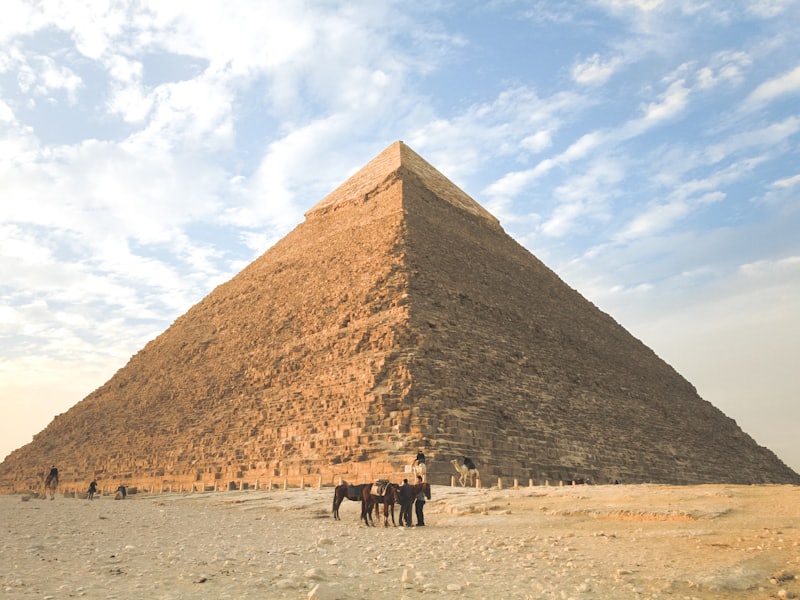
The Giza plateau is the obvious headline for any Egypt visit with children, and the pyramids deliver on scale and impact. The practical challenges are real: the plateau itself is dusty, hot and has limited shade; inner-chamber entry at the Great Pyramid involves a very steep, narrow descending corridor (crouching required) that some younger children find distressing; the Solar Boat Museum is a longer walk than most maps suggest. The best family approach is an early morning exterior visit to the plateau combined with GEM access the same day, treating both as a Giza experience rather than forcing inner-chamber entry if children are not enthusiastic. Child plateau entry: EGP 180.

Seasonal pricing for Giza →
A family at a museum information desk planning their visit
Planning tip

Combining children's rates with group discounts

Families of five or more adults plus children can sometimes access informal group rates at sites even below the published 10-person threshold, particularly during low season. The key is advance written contact with the site administration (not a booking portal) stating party size, nationality and intended visit date. We draft these requests for clients as part of the planning process — a successful group negotiation at the Valley of the Kings, for example, can reduce the adult entry from EGP 480 to EGP 380, saving a family of four adults EGP 400 on that one site. Combine with children's rates and the family total changes significantly.

See our planning services →
Group rates

Group discounts for families and larger parties — what actually works

Official group rates require a minimum of 10 foreign visitors in most cases, which is a threshold many families do not reach. But there are three practical routes to group-level savings for smaller family parties, and the most effective one is also the least well-known.

The Ministry of Tourism and Antiquities publishes group entry rates for parties of 10 or more foreign visitors at most of its administered sites. At the Valley of the Kings, for example, the group rate is EGP 400 per adult versus the standard EGP 480 — a 16% saving per adult that covers the per-person photography permit as part of the group arrangement. At the Giza plateau, the group rate is EGP 300 per adult versus EGP 360. These rates are not available at the walk-up cashier window; they require advance written request submitted to the site administration through the Ministry's booking office, typically 7–14 days before the visit.

For families below the 10-person threshold, the most effective route to group-like savings is combining with another unrelated small group at the point of purchase. This is informal and not guaranteed, but at sites like the Valley of the Kings and Karnak where guided groups of mixed nationalities frequently arrive at similar times, a tour operator who is already managing a group of 8 may be willing to add 2–4 individual foreign visitors to reach the 10-person threshold if asked politely and directly. The tour operator does not profit from this — it simply makes their group count work for the rate they have negotiated. It is worth asking.

For families travelling with extended relatives — two or three family units combining for a shared Egypt trip — a party of 8–12 adults plus children is common enough that advance group-rate request is well worth making. We assist clients with drafting the advance written request to site administration for any group of 6 or more, and we track the response timeline to ensure the approval arrives before the visit date. See our passholder perks page for additional benefits that group visitors can stack on top of the group rate, including queue-priority arrangements at several high-traffic sites.

Note that group rates do not stack automatically with children's rates in a simple additive way. The group rate is calculated on adult headcount, and the children's ticket is still purchased separately at the children's price. However, for a party of 10 foreign adults plus 4 children aged 6–12, the combination of group adult rate and children's half-price adds up to meaningful savings, particularly at a multi-site day covering Karnak, Luxor Temple and the Luxor Museum. We run these calculations for specific party compositions when clients contact us. Check our visitor budgeting guide for the base pricing structure that the group discount applies to.

Practical advice

Planning an Egypt family trip — the logistics that matter

Beyond ticket pricing, several practical factors determine whether a family visit to Egypt's monuments is enjoyable or exhausting. These are the questions we hear most from families planning their first Egypt museum trip.

Strollers and accessibility. The GEM is the most stroller-friendly site in Egypt by a wide margin — lifts, smooth floors, wide corridors. The Egyptian Museum on Tahrir has lifts and is manageable with a compact stroller, though the display rooms are tighter. The Giza plateau, Valley of the Kings, Karnak, Abu Simbel and all open-air sites are effectively stroller-inaccessible in the way that a folding stroller with pneumatic tyres on soft sand and gravel would be manageable but not convenient. A baby carrier or ergonomic pack is the practical solution for children under 3 at outdoor sites.

Heat and timing. For families with children under 10, the single most important planning factor in Egypt is heat management. In Cairo and Giza the summer peak (June–August) pushes midday temperatures to 35–40°C; in Luxor to 42–45°C. The practical implication is that outdoor sites should be visited between 6:00am and 10:30am, with the afternoon reserved for the GEM, the Egyptian Museum or the Luxor Museum — all air-conditioned. Planning two outdoor mornings followed by two indoor afternoons per city gives four site-days of useful family visiting time per location without heat-related distress.

Age-appropriate sites by city. In Cairo: GEM for all ages from roughly 4 upwards; Egyptian Museum for ages 9 and above; Citadel for ages 6 and above (wide open spaces, good views, less museum fatigue). In Giza: plateau exterior for all ages; inner chamber for ages 10 and above who are comfortable with enclosed spaces and steep climbs. In Luxor: Karnak for all ages from 5 upwards; Luxor Temple for ages 6 and above; Valley of the Kings realistically for ages 8 and above; Medinet Habu for ages 7 and above (less crowded, painted reliefs children respond to well). In Aswan: Philae for all ages (the boat is a highlight for children); Nubian Museum for ages 6 and above; Abu Simbel for ages 5 and above.

Buying tickets for children at the gate. Children's tickets at most sites require no advance documentation — age is assessed visually or by parental declaration. The exception is any site where a school-group or organised group rate is being applied: in those cases, the site cashier may ask for documentation confirming group composition. For standard family visits, no advance booking is needed for children's tickets beyond what is required for adult entry. At the GEM, children's timed-entry slots are bundled with the adult booking — when you book adult timed entry online, you add children at the children's rate in the same booking. The GEM does not sell children's-only timed slots.

Common questions

Family and group passes — frequently asked

The free-entry threshold varies by site. At Ministry of Tourism and Antiquities sites — including the Egyptian Museum, Karnak, the Valley of the Kings and the Giza plateau — children under 6 years old enter free with a paying adult. The GEM applies the same under-6 rule for its standard entry but charges for children aged 6–12 at 50% of the adult foreign-visitor rate (EGP 450 for a child vs EGP 900 adult). The Nubian Museum in Aswan and most smaller regional sites follow the same under-6 free, 6–12 half-price structure. Abu Simbel charges children over 4 years at the children's rate; under-4 entry is free.

The Cairo Pass is sold at a single rate per person (USD 100) without a children's version. A child aged 6 or over who enters a covered site uses the pass in the same way as an adult. Because the pass is priced in USD at the full adult rate, it is worth calculating whether buying a Cairo Pass for a child aged 6–12 is more or less expensive than paying the 50% children's gate price at each site individually. For most itineraries we see, children aged 6–12 are better served by individual children's tickets rather than a full-price pass, unless the itinerary is unusually dense.

Published group rates at Ministry-administered sites are generally available for groups of 10 or more foreign visitors. In practice, tour operator groups using licensed Egyptian guides often negotiate rates for slightly smaller groups (8–9 people) through advance written request to the site administration. Walk-up groups of 10 or more should ask for the group rate at the cashier — it is not always offered automatically. During the low season (June–August) there is more site-level discretion to approve ad-hoc group rates for parties of 6 or more, but this must be arranged in advance, not at the gate.

The Grand Egyptian Museum has one of the better family layouts of any major museum in Egypt. The ground floor is genuinely accessible — wide corridors, stroller-friendly surfaces, clear wayfinding graphics, and air conditioning throughout. The GEM Kids area on the ground floor has interactive exhibits aimed at children aged 4–10, including hands-on archaeology-themed activities and large-format displays that work well for younger visitors. The upper Tutankhamun galleries involve stairs (lifts available) and the lighting is deliberately low for conservation; younger children may find those rooms less engaging. Plan 2 hours for a family visit rather than the 3–4 hours an adult solo visitor might take.

Karnak is the standout family site in Luxor — its scale, the famous hypostyle hall, the sacred lake, and the avenue of sphinxes all have strong visual impact for children of any age. The Luxor Museum is a calm, well-explained indoor alternative that works well for children who may be fatigued after outdoor sites. The Valley of the Kings itself is not ideal for children under 8: the tombs are underground, dimly lit, require ducking in low passages, and the heat is intense. Medinet Habu (Mortuary Temple of Ramesses III) on the West Bank is less visited, less crowded, and has exceptionally well-preserved painted reliefs that children respond to more readily than plain stone.

Strollers are impractical at both Giza and the Valley of the Kings. The Giza plateau is largely hard-packed sand and gravel with no paved paths near the pyramids or Sphinx; a compact folding stroller can be managed but a large pushchair cannot. The Valley of the Kings has paved internal roads but the tomb entrances involve steps and low doorways; strollers must be left at the entrance to each individual tomb. The GEM is the most stroller-friendly site in Egypt by a substantial margin. The Egyptian Museum on Tahrir has lifts to all floors but some display areas have tight turning space for larger strollers. Plan a baby carrier as the primary option for Giza, the Valley of the Kings and outdoor open-air sites.

Plan your family visit — we'll sort the tickets

Tell us the ages of children in your group, the sites you're considering and your travel dates. We calculate the exact family budget, flag which pass works for your group size, and check whether a group rate request makes financial sense.

Get family pricing advice Compare pass plans